










DATA & AI
Data and AI consultancy on Microsoft Fabric and Azure
Konsolute helps organisations turn scattered data into trusted reporting and AI-ready foundations. We design and build Microsoft Fabric and Azure data platforms, Power BI reporting and governance, delivered by security-cleared UK consultants.
FROM DISCONNECTED DATA TO USEFUL INSIGHT
Data your people can understand, use and trust
When reports disagree, information sits in separate systems and every analysis starts with another spreadsheet, better decisions become harder. Konsolute helps connect data sources, engineer reliable data flows and build reporting around agreed business definitions. We establish the quality, access and ownership needed to make those foundations useful for analytics and future AI initiatives.
Data strategy & platforms
Assess your data estate, reporting priorities and team capability, then design a Microsoft Fabric or Azure platform with the right workspaces, storage, capacity and environments for your workloads.
Data integration & engineering
Connect business applications, databases, APIs and files with reliable pipelines for extraction and transformation, including incremental loading, validation, failure handling and reconciliation.
Power BI & analytics
Create reusable semantic models and Power BI reports with clear measures and access rules. Agree KPI definitions with business owners, validate results and give users reporting they can trust.
Data governance & quality
Establish data ownership, classification, access and quality rules. Map lineage with Microsoft Purview, so people know where data came from, who owns it and whether it can be trusted.
AI data readiness
Assess the availability, quality, permissions and context of data for selected AI use cases, and identify what needs preparing before moving to forecasting, machine learning or AI search.
Data platform optimisation
Review pipeline reliability, query performance, capacity and report usage. Prioritise improvements to refresh times, consumption and running costs, with evidence of the effect of each change.
HOW WE DELIVER
From business questions to a working data service
We start with the decisions your people need to make. Delivery connects source assessment, platform design, data engineering and business validation, so the result includes more than a dashboard or a storage layer.
01 - Discover
Map business questions, source systems and existing reports. Identify data owners, refresh needs, quality issues and the measures that will define a useful first release.
02 - Design
Define ingestion patterns, storage and modelling choices, access controls and KPI definitions. Assess Fabric and Azure options alongside licensing, capacity and operating requirements.
03 - Build & validate
Implement pipelines, curated datasets and reporting in agreed increments. Reconcile results with source records and test transformations, refresh failures and user access.
04 - Operate & evolve
Deploy through controlled environments and hand over definitions, runbooks and ownership. Track quality, refresh performance and capacity, with a backlog for the next data products or AI use cases.
GOVERNED DATA FOUNDATIONS
Know where data came from and who can use it
A useful data platform needs clear definitions and accountable owners. We design controls across ingestion, storage, semantic models and reporting, rather than assume a permission on one layer protects every access path. Quality checks and lineage help teams trace unexpected results and understand whether data is suitable for its intended use.
- Named data owners, stewards and agreed business definitions
- Source validation, transformation checks and reconciliation
- Access controls tested across each relevant data layer
- Classification, lineage and information-handling requirements
- Quality monitoring, exception handling and review ownership
WHERE THIS MAKES A DIFFERENCE
Spend less time assembling data. More time using it.
Start with a reporting problem or a decision that needs better evidence. We map the relevant sources, definitions and access requirements, then define a focused data product or improvement workstream.
Common starting points include:
- Conflicting KPIs: agree definitions and build reusable models for consistent reporting
- Manual reporting: replace repeated exports with scheduled, validated data pipelines
- Disconnected sources: combine relevant finance, customer or operational data with traceable mappings
- Platform constraints: review slow refreshes, unreliable pipelines or capacity pressure
- AI preparation: assess whether the required data is accessible, suitable and appropriately governed
See it in practice: Konsolute built a governed Azure data platform on a medallion architecture for Nuclear Waste Services, giving the organisation trusted data for reporting.
Choose the platform around the workload
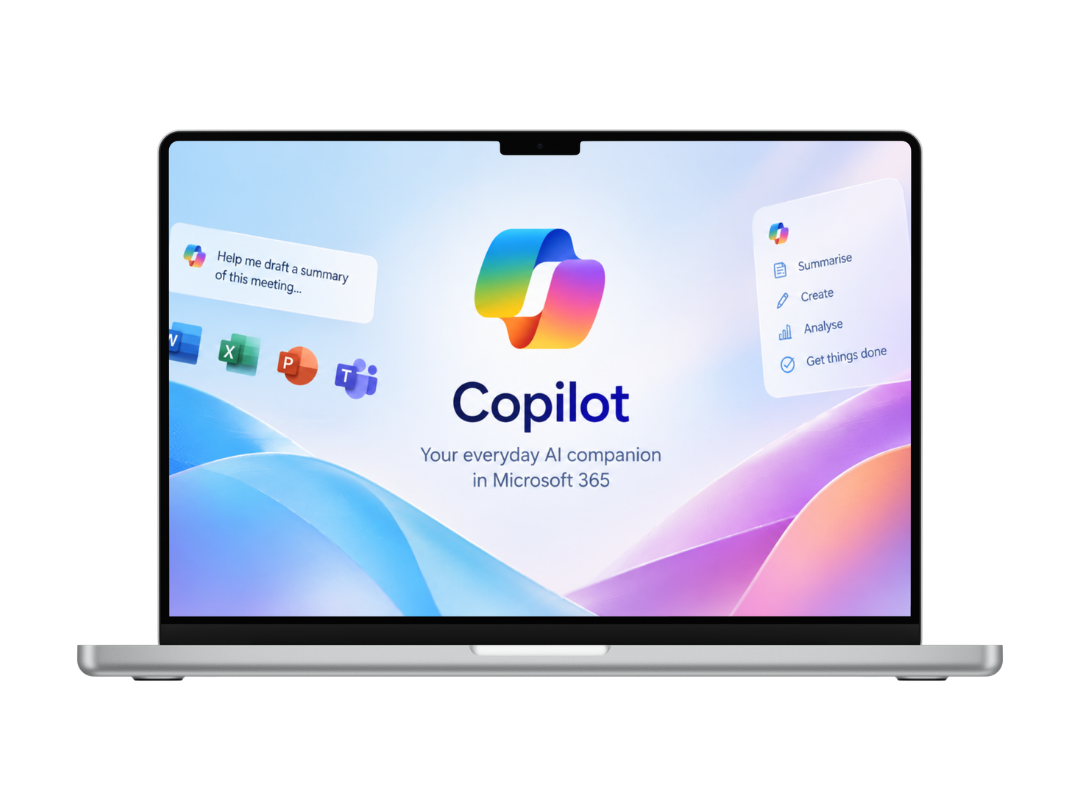
Microsoft Fabric brings together data engineering, warehousing, analytics and reporting, while Azure provides services for more specialised or existing data architectures. We assess how they fit your estate, including third-party and on-premises sources. Storage, transformation, serving and governance choices are made against workload needs, skills and operating costs.
Microsoft Fabric
OneLake, lakehouse and warehouse patterns, with workspaces, environments and capacity planned around the data products you need.
Azure data services
Azure storage, SQL and integration services selected around existing workloads, connectivity requirements and the target architecture.
Data engineering
Ingestion and transformation using pipelines, SQL or Spark where appropriate, with quality checks and recovery designed into the flow.
Power BI & semantic models
Business measures, relationships and report experiences, with security and refresh or query behaviour tested against the chosen model.
Governance & lineage
Data ownership, classification and traceability across the agreed estate, with supported Fabric and Purview capabilities assessed.
AI data foundations
Curated datasets and contextual information for selected AI scenarios, with permissions, evaluation needs and lifecycle ownership identified.
WHAT YOUR TEAM RECEIVES
A usable platform, with definitions and ownership
The scope identifies the platform components, data flows, models and reports to be delivered. Your team receives the configuration and documentation needed to understand the implementation, trace its results and operate it, with known limitations and remaining data issues made visible.
FAQ
Data & AI FAQs
Data platforms, reporting, governance and AI readiness — explained.
The service spans platform assessment and design, data integration, engineering, Power BI reporting, governance and AI data readiness. We define which sources, data products and implementation tasks are included, with business outcomes and acceptance criteria for the first release.
Not necessarily. We assess Fabric against your existing Azure services, data sources, reporting requirements and operating model. The recommendation considers functionality, capacity, licensing and the effort of introducing or changing the platform.
Yes, subject to supported interfaces and access. We assess databases, APIs, connectors and file exchanges across cloud, on-premises and third-party systems. Vendor limits, extraction windows, network connectivity and data ownership shape the integration design.
We compare data types, transformation patterns, query requirements and team skills. A lakehouse can suit file-based and engineering workloads, while a warehouse can fit SQL-based analytical serving. A solution may combine patterns when the workload justifies the added complexity.
We can review model structure, relationships, measures, report usability and performance. We also assess source quality, refresh dependencies and KPI definitions, because a report’s reliability depends on the data and logic beneath it.
We trace the source data, filters, joins and calculation rules with the business owners. Agreed definitions and reconciliation checks inform shared semantic models and reporting. Remaining differences or limitations are documented rather than hidden behind a new dashboard.
We assess the freshness needed for the decision and the capabilities of the source systems. Scheduled, incremental, streaming or other supported patterns have different costs and operating demands. Near-real-time requirements are validated against the complete path from source to report.
We design access across the platform, storage, models and reports in scope. Role-based permissions, row-level security and classification are assessed where appropriate, with tests for different user roles and access paths. A restriction in one layer is not assumed to secure all others.
It means assessing whether the information required for a particular AI use case is available, sufficiently reliable, understandable and accessible under the right permissions. The work identifies preparation, evaluation and ownership needs; deploying a data platform alone does not establish readiness for every AI scenario.
A selected use case can progress into a separately defined development workstream. Discovery establishes the business task, data suitability, evaluation criteria and operating requirements before committing to a model, retrieval architecture or production implementation.
We assess expected processing, concurrency, refresh patterns and reporting consumption alongside existing entitlements. The design identifies relevant capacity and licence dependencies, with assumptions recorded and usage reviewed after deployment rather than promise a fixed running cost before assessment.
We can scope ongoing work around pipeline monitoring, incident handling, performance, data quality and releases. The agreement defines responsibilities, coverage and escalation routes, including the division between platform administration, data ownership and business reporting support.
START WITH THE BUSINESS QUESTION
What should your data help you do?
Tell us which reports are difficult to trust, which sources need to connect or which AI use case depends on better data. Konsolute will help define the first useful outcome and the platform, engineering and governance needed to deliver it.